
The Real Cost of acquiring Direct Bookings
We are all quite rightly obsessed with the hefty commission costs from OTA's such as booking.com and Expedia. But if I ask any hotel within the Right Revenue portfolio how much a direct booking costs, the first…
The Real Cost of Acquiring Direct Bookings
We are all quite rightly obsessed with the hefty commission costs from OTA's such as booking.com and Expedia. But if I ask any hotel within the Right Revenue portfolio how much a direct booking costs, the first response I am normally given is the percentage commission on their brand booking engine - which of course is not a true reflection. So what is and why do we need to know it?Why we need to know it is a simple question to answer with another question; why on earth would you not want to know??? Good hoteliers understand cost and by understanding cost, you understand which channels are working for you; which are the most profitable and where you should be concentrating your sales and marketing activity.As hoteliers we should already be measuring and tracking OTA impact and that shouldn't just be about the commission level but also the impact of midweek v weekend business / lead time / rate of cancellation / incremental spend etc but if we are looking purely at cost, we of course should focus purely on commission levels. The average as we know, sits around 18%.How do we start to measure direct costs? Here are some simple guidelines to help:
- start with a period you wish to measure. This may be a month, fiscal period or year
- decide on whether you wish to track against bookings 'made' or bookings that 'stayed'. There are arguments for and against which is best and the decision of course lies with you. If you choose bookings 'made', you may well feel that you are getting a true reflection of results after marketing campaigns (as an example). However what this production figure does not take into account are cancellations, so you may feel that measuring on bookings that 'stayed' is more reflective of your business. Basing figures on business that 'stayed' is also an easier metric for most hotels (and why it is my choice) as it is easier to measure against produced revenue for the same period - so costs versus actual revenue achieved.
- be careful not to mix nett or gross rates. Choose one and stick with it.
Once you have your perimeters then we start to look at assigning costs - now the fun starts!
- Fixed Costs - are you paying fees to be part of a Tour Operator or Consortia programme? If there is a fixed fee for let's say one year and you are measuring costs for 1 month, then take the annual fee eg. £500.00 and divide it by 12 to average a total of £41.66 per month
- GDS fees - if you are paying a fee per booking as well as commission, don't forget to factor this in
- PPC Fees - this is where you need to get clever. If your PPC campaign is designed totally around rooms and direct sales then you may wish to allocate 100% to costs. However, if you have a mixture of campaigns for rooms and wedding or dining then you will need to allocate only a set percentage eg 70% to room costs.
- SEO - this probably will be assigned to the property as a whole, so as above, you may wish to assign only a percentage to room costs
- Booking Engine - this cost will need to be allocated in full. As above, if you are using 'stayed' reservations to measure then take 100% of the commission on these materialised bookings and use in your calculations
- Booking Engine Tech - this would include support technology such as TripTease or basket abandonment software. I would suggest allocating 100% against room costs.
- Brand Site Costs - such as hosting or design/development. A much smaller percentage should be assigned to rooms as the rest of the property definitely benefits, but there should be something shown against room costs
- Meta Search - sites such as Trivago / TripAdvisor - although directed at bedroom sales, in general these sites push people to your brand URL, so you may wish to attribute a portion to rooms rather than 100%
- Social Marketing such as Facebook campaigns - there may be times when these campaigns are rooms-only-focused and other times when other outlets such as spa are promoted. Allocate costs accordingly
- Email Marketing - again I would suggest that only a portion of the cost is assigned to rooms as your brand site as other outlets will benefit from this type of marketing
- Loyalty Programmes - there may be a strategy to drive repeat room bookings but if you feel that other outlets benefit then again assign only a percentage
- Call Centre - if you use a call centre, then again costs need to be attributed to rooms division.
- Marketing - this can be a huge cost to any hotel but even simple costs such as new photography need to be allocated a percentage cost to rooms
As with marketing, the largest expense that a hotel usually incurs is Sales. So how do you work out what if anything should be allocated to Rooms Division? Well start by asking yourself if the promotion - whether it is a sales trip or offline advertising etc - is focused purely on Rooms or does the rest of the hotel benefit? If the campaign is more about lifting or promoting your brand then you may wish to allocate nothing or very little against rooms, but if the campaign is firmly about driving your Book Direct strategy then the cost must firmly sit with accommodation.The best way to get a handle on cost of sale (if you don't have a Revenue Management system to do this for you) is to start with a simple spreadsheet:
| Expenses | Total Amount | % Allocated | Cost |
| June 2018 | |||
| Booking Engine Commission | £ 1,300.00 | 100% | £ 1,300.00 |
| PPC Campaign | £ 900.00 | 70% | £ 630.00 |
| SEO Management | £ 250.00 | 30% | £ 75.00 |
| Meta Search | £ 220.00 | 100% | £ 220.00 |
| Booking Engine Tech (TripTease or basket abandonement technology) | £ 300.00 | 100% | £ 300.00 |
| Customer Loyalty Programme | £ 500.00 | 60% | £ 300.00 |
| GDS Fees | £ 90.00 | 100% | £ 90.00 |
| Consortia Fees | £ 140.00 | 100% | £ 140.00 |
| Trade Shows | £ 300.00 | 50% | £ 150.00 |
| Sales | £ 2,500.00 | 60% | £ 1500.00 |
| Total | £ 4,705.00 | ||
| Total Value of Reservations | £ 51,244.00 | ||
| % cost of sale | 9% |
This of course is just an example, but I hope this helps and goes some way to help you understand your cost of sale. Take a template such as this, add your own costs and metrics and let's get a handle on your figures...(and for all things revenue, just ask@rightrevenue.wpengine.com)
Latest from the blog
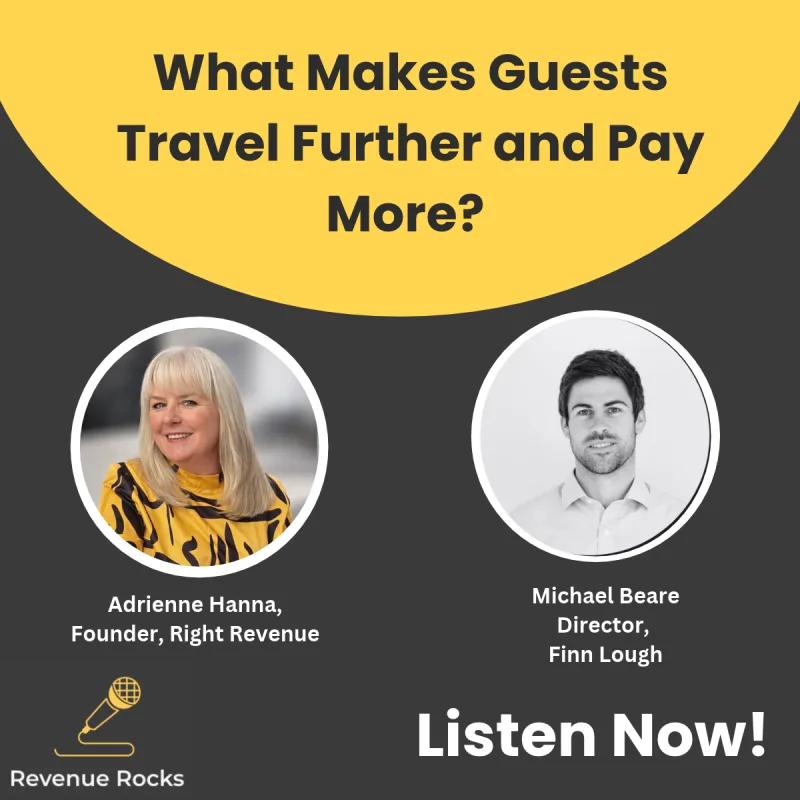
1 min read
What makes guests travel further and pay more for a hotel experience? In this episode of Revenue Rocks , Adrienne Hanna talks to Michael Beare from Finn Lough about creating demand, communicating value and turning…
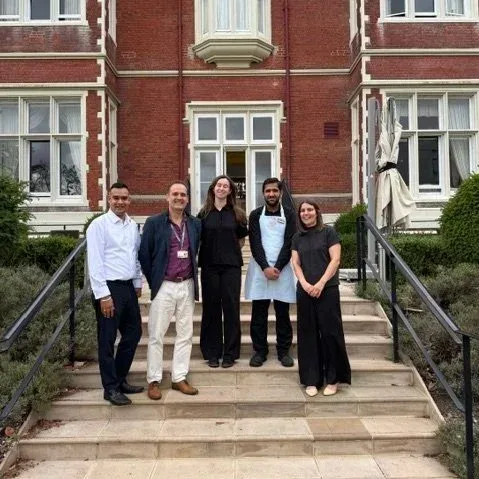
4 min read
Learning revenue management in theory is one thing. Seeing how it actually works within a live hotel is where it really starts to come to life. That’s why we’re so pleased to be working with Edge Hotel School and…
6 min read
There’s been plenty of noise around England’s proposed tourist tax, but for hotels the bigger question is simple: what will it do to the final price the guest sees? With different areas potentially setting different…
Address
Right Revenue
5 Windmill Business Park
Saintfield
Ballynahinch
BT24 7DX